30 September 2026
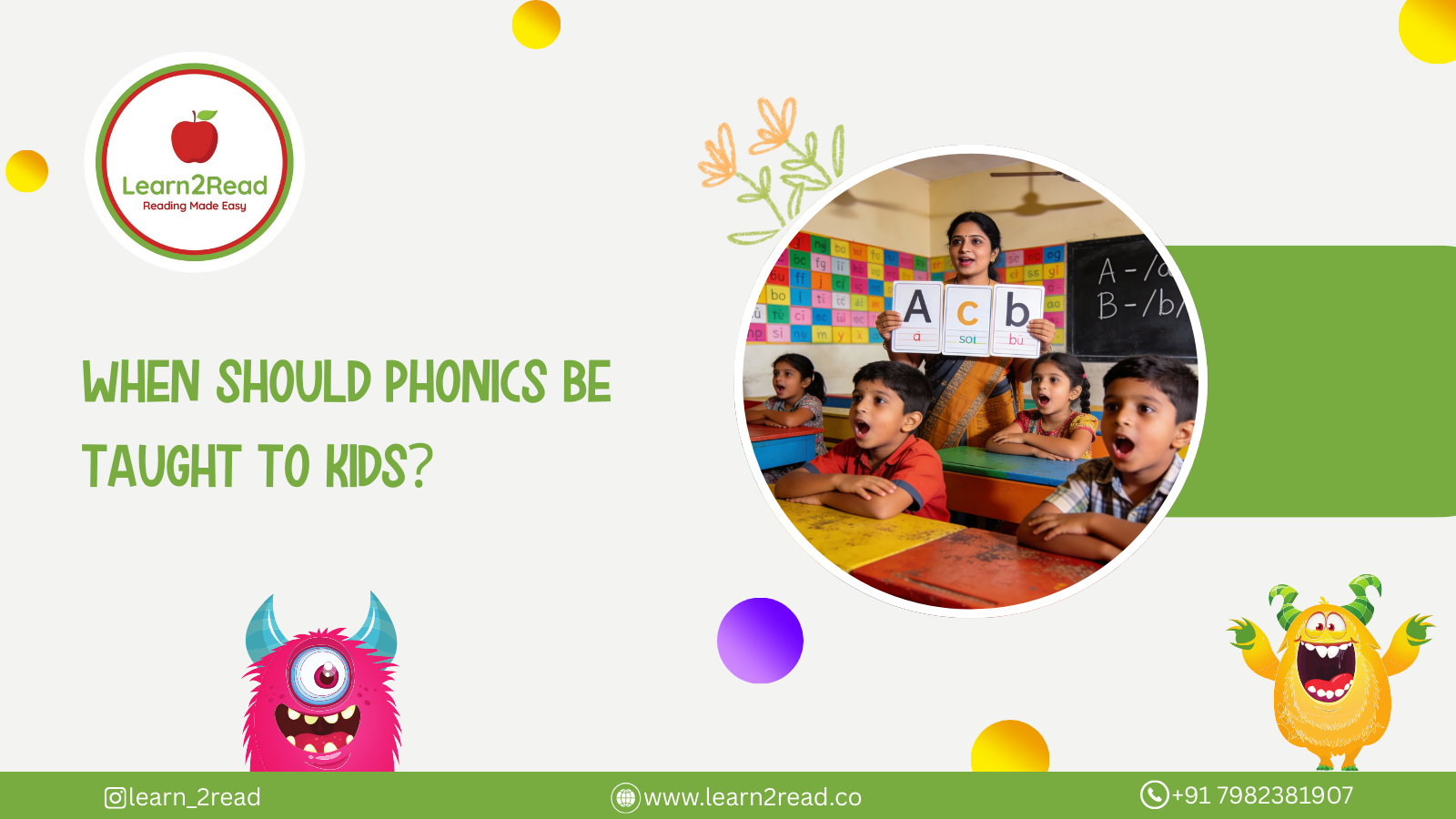
When Should Phonics Be Taught to Kids?
When Should Phonics Be Taught to Kids?
posted on : 29 December 2025
It's delightful to watch your kid read English fluently. And that too at such a young age. But parents and teachers often wonder: When should phonics be taught?
Teaching phonics too early can make your child feel overwhelmed. Starting a bit late, and learning becomes a struggle for them. It’s important to consider both timing and the right approach.
In this blog, you’ll learn when, how, and in what order phonics should be introduced to children. Along with the mistakes to avoid, to help your child become a confident reader.
What Is Phonics, and Why Does It Matter?
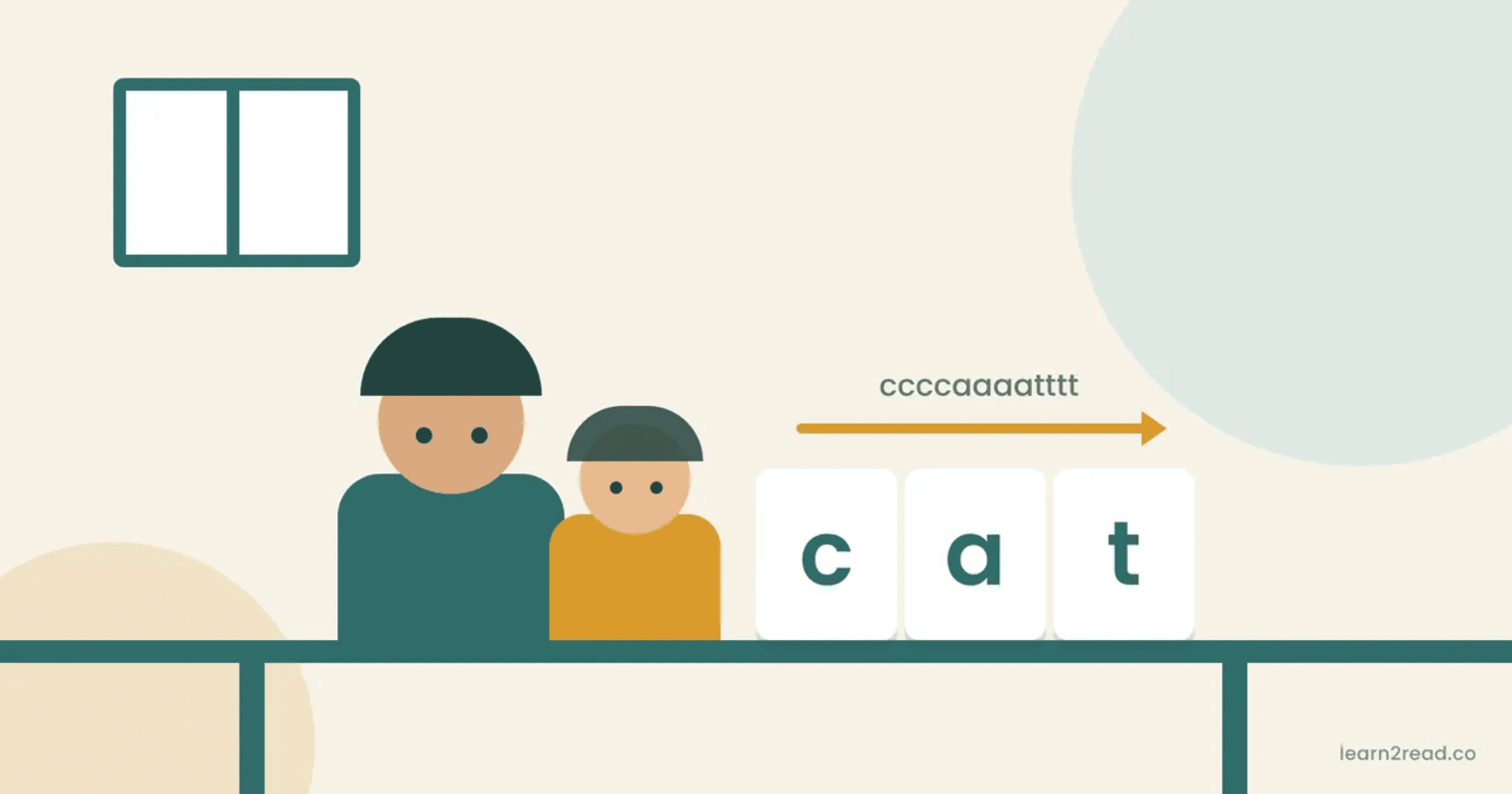
Phonics helps children identify the individual sounds of letters. This allows them to decode, segment, and spell words while writing. It’s advisable to follow a systematic phonics approach for young readers. This approach helps children develop language skills in a sequence. These skills include letter recognition, letter-sound relationship, segmentation, blending, and, lastly, decoding new words.
Introducing phonics early benefits children in many ways. Including:
- Your child will learn to read with confidence.
- They will understand the text better and improve their spelling skills.
- They will strengthen their writing skills.
- Phonics will improve their academic performance.
- You can make phonics teaching fun & interactive, not restricted to boring lessons.
Explore our online phonics classes to give your child a play-based learning experience.
When Should Phonics Be Taught to Children?
According to the Science of Reading, you should introduce phonics between the ages of 3 and 6. The timeline is ideal because your child will be curious at this age. As well as fall in love with reading through playful phonics activities.
Signs Your Child Is Ready for Phonics:
- Your child is showing interest in books, stories, and reading.
- By chance, they recognized some letters and their sounds.
- Your child understands that objects, prints, or cards carry some meaning.
- Children showing curiosity for books, numbers, stories, or letters.
- You notice that your child is listening and playing with random sounds.
Remember, some kids may be ready to learn phonics at an early age. While others may take time. So, follow your child’s pace and be patient throughout the journey.
Furthermore, here is a simple breakdown to help you clarify the question, ‘When should phonics be taught?’
- Age 0-2: This is a pre-literacy development phase. Your child will start identifying speech sounds, tone, and rhythm in conversations.
- Age 2-3: During this phase, you can introduce rhymes, songs, and sound play to develop phonological awareness.
- Age 3-4: By this age, your child will recognize a few basic individual sounds. Also, some letters, like the initials of familiar names.
- Age 4-5: With correct guidance, your child will learn the letter-sound relationship. As well as identify 3-letter words. For example, cat, pin, or see. During this age, formal phonics instructions are introduced in schools.
- Age 5-6: At this phase, your child will begin to blend simple sounds. And start reading short words and simple phrases.
In what order should phonics be taught?
Phonics learning starts with phonemic awareness. Before you introduce phonics rules, let your child hear, recognize, and play with the sounds.
Take a look at the research-backed order of phonics you can follow:
- Phonemic Awareness: The first stage, where your kid will hear and identify individual sounds (phonemes) in spoken words.
- Letter-Sound Relationship: In the next stage, your kid will learn that each letter represents a specific sound. And will learn to connect written letters (graphemes) with spoken sounds (phonemes).
- Blending and Segmenting: Your child will now blend sounds to read new words. As well as break down words to spell them.
- Introduce Word Families: In the last stage, you can teach them to recognize word families. For example, the ‘at’ word family is cat, bat, hat, & mat.
- Digraphs and Consonant Blends: Once your child understands individual sounds, introduce digraphs. Digraphs mean that two letters combine to form a single sound. For example: ch, sh, th, wh, or ph. Then move to consonant blends, where two sounds are said quickly & together, like bl, st, gr, tr, or cl.
- Advanced Phonics Rules: Next, you can teach advanced rules of phonics. Such as the magic ‘E’ rule, various long & short vowel rules, r-controlled vowels, and diphthongs.
Therefore, understanding phonics rules will help your child develop reading, writing, and spelling skills. Gradually, they will start reading with confidence.
How to Introduce Phonics at Home or School
Follow these 5 practical tips to teach phonics at home or school effectively:
- Use Multi-Sensory Techniques: Teach phonics in a way where children can see, hear, and move. Activities such as sand tracing, magnetic letters, clapping syllables, singing songs, and reciting rhymes will make learning enjoyable.
- Fun Phonics Games: You can introduce phonics rules with interactive phonics games. Such as I Spy, find the hidden object, or phonics bingo.
- Keep Sessions Short: Daily, 10–15 minutes a day is enough for learning phonics. Avoid long sessions, as your child may lose interest and feel overwhelmed.
- Celebrate Small Achievements: You should always appreciate your child’s efforts. Celebrate their small wins and let them learn new concepts at their own pace.
- Utilize Online Resources: Make good use of technology. You can use flashcards, kids’ English cartoons, and online phonics courses to help children learn phonics more effectively.
At Learn2Read, we provide a joyful learning experience to your children. The step-by-step approach and fun phonics activities transform your child into a confident reader.
Common Mistakes to Avoid While Teaching Phonics
Check out the list of common mistakes you should avoid while teaching phonics:
- Introducing letter names before sounds.
- Skipping blending rules and jumping straight into teaching words.
- Making phonics teaching boring and feel like textbook lessons.
- Making phonics lessons too long.
- Not appreciating your child’s efforts and small wins.
Conclusion
Now that you know, when should phonics be taught? Along with a systematic approach, you should follow. Formal phonics lessons are introduced in preschool or kindergarten. By reaching the first grade, your child is aware of basic phonics rules.
However, every child has their own pace and learning style. Instead of being pushy, it’s advisable to match their learning speed. Introduce phonics once your child shows signs of readiness. Take a systemic approach to build a strong reading foundation.
Being a parent or teacher, your responsibility doubles. You’ll help your child develop reading skills that last a lifetime. Choose Learn2Read’s interactive English phonics classes to make your child’s learning journey fun & meaningful.
Frequently Asked Questions (FAQs)
1. How should phonics be taught?
Follow a systematic approach to teach phonics to children. Introduce phonemic awareness, letter-sound relationships, blending, segmentation rules, digraphs, diphthongs, and lastly, advanced vowel rules.
2. How long should phonics be taught?
The ideal age to teach phonics is between 3 and 6 years. A daily 10-15-minute learning session is sufficient for young readers.
3. When to stop teaching phonics?
You can stop teaching phonics once your child can read English fluently and spell complex words.
4. How much phonics should I teach?
You should teach all the core topics, such as phonemic awareness, phonological awareness, vowel rules, CVC words, and Jolly Phonics, to gain a comprehensive knowledge. Conduct 10 to 15-minute phonics sessions daily for preschoolers.
5. At what age should phonics be taught?
The ideal age to introduce basic phonics is 3 years. With the right approach and good practice, your child will start reading by the age of 5-6 years.

Latest Posts
26 September 2026
What to Ask Your Child's Teacher About Reading (2026)

23 September 2026
When Your Child Cries at School Drop-Off: What to Say
19 September 2026